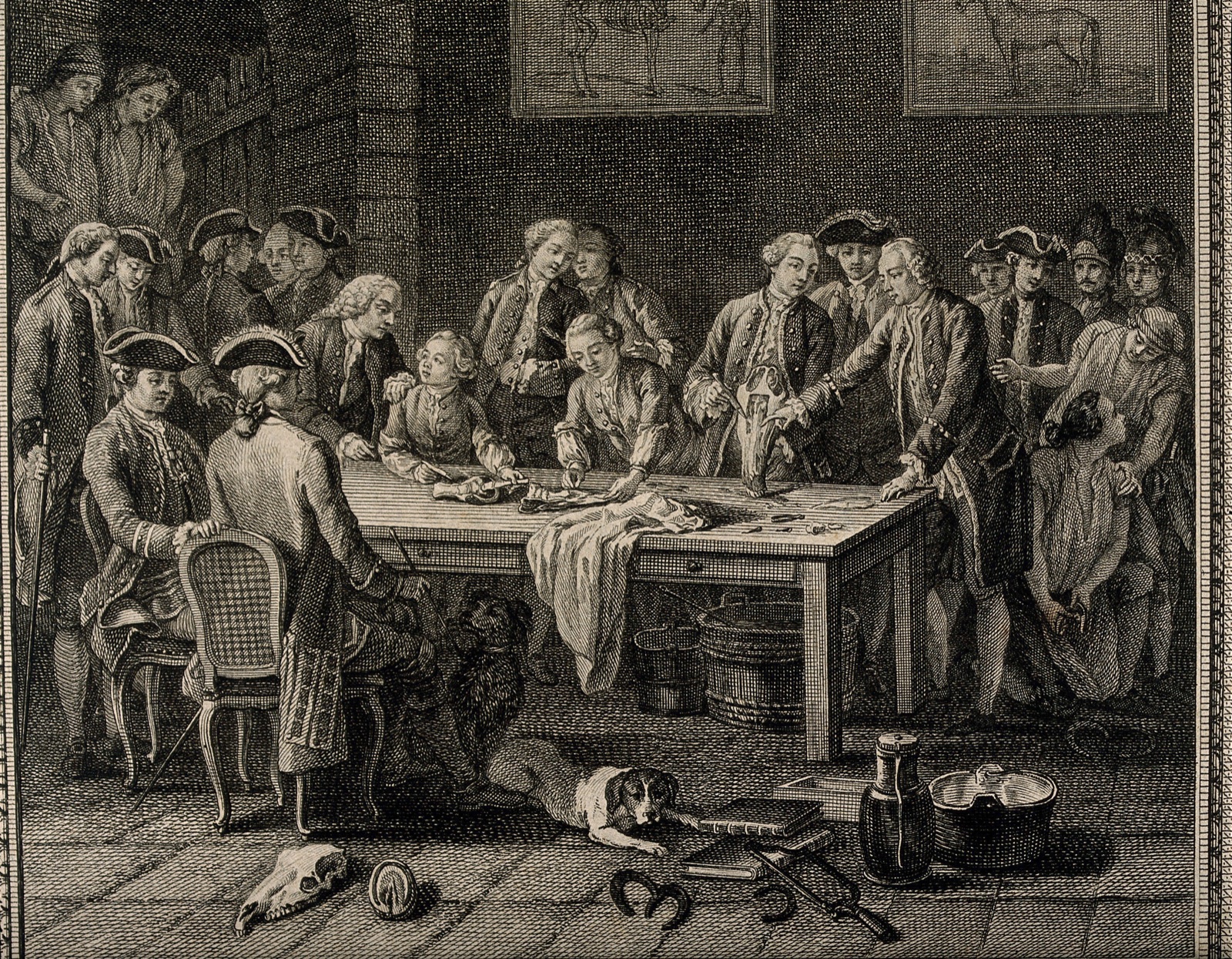
Horses' hooves, seen from below: four figures showing both perfect and contracted feet, demonstrating Mr. Coleman's 'artificial frog' for the preservation of horses' hooves. Etching by J. Barlow, 1802.
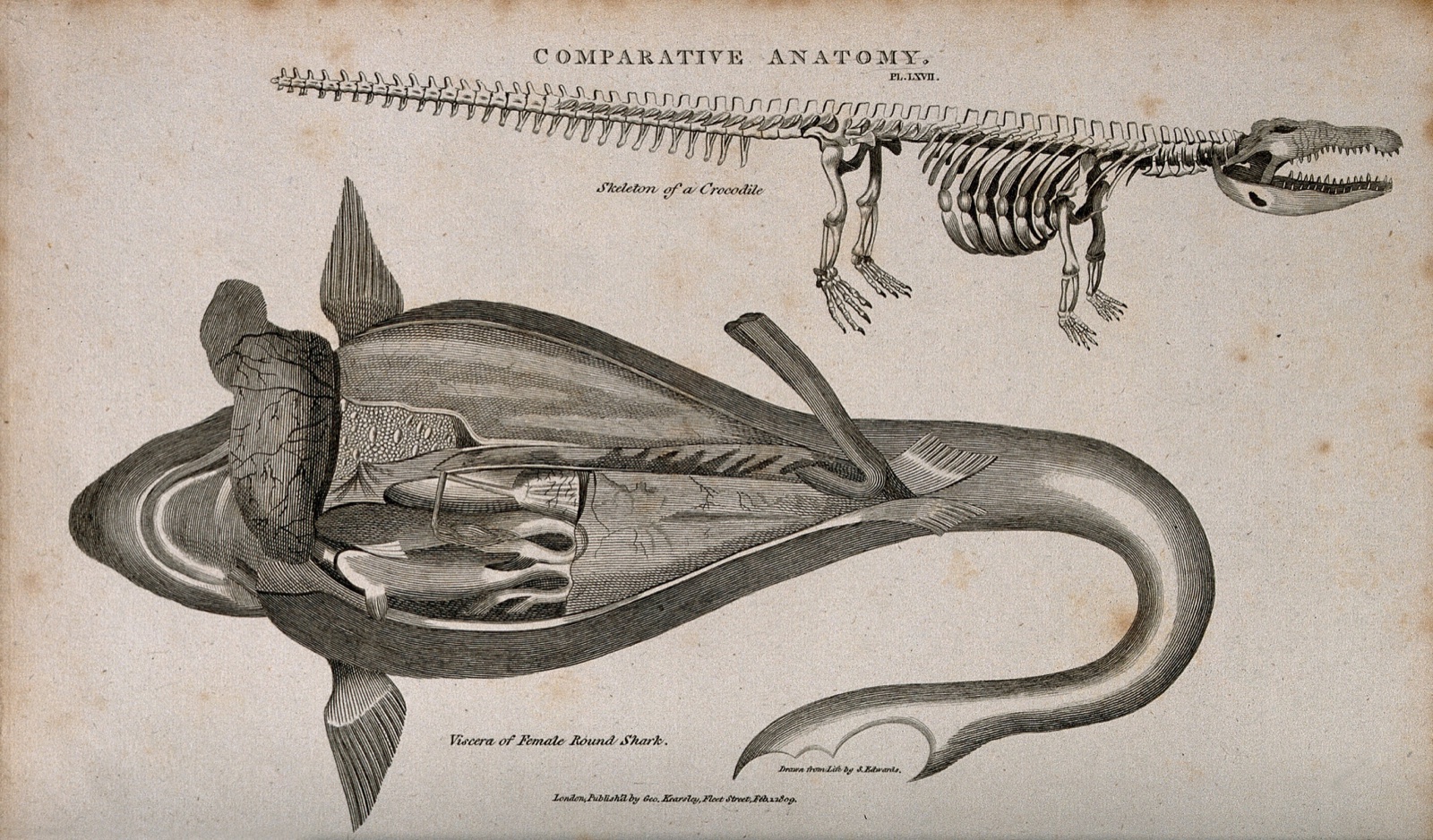
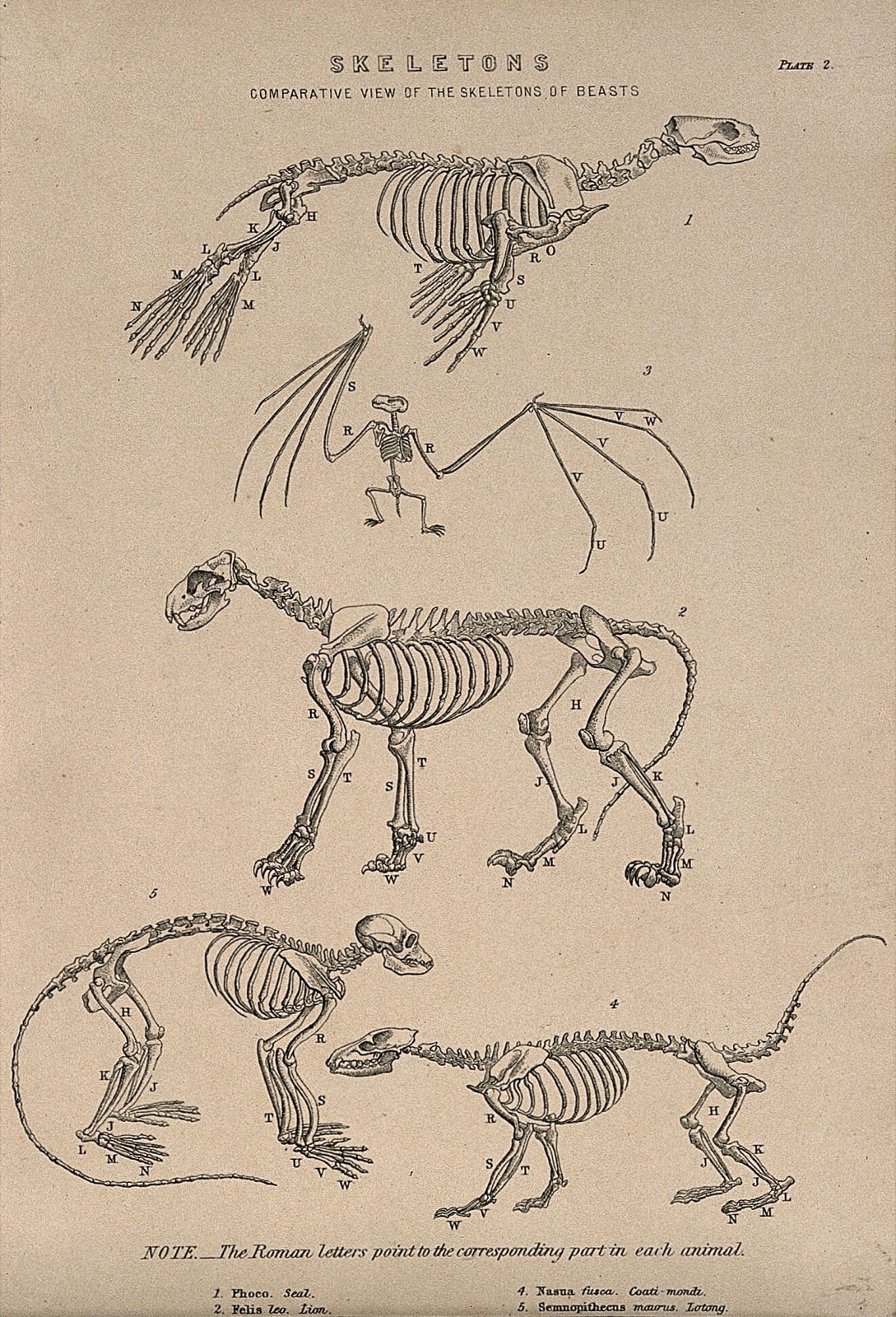
Skeletons of various reptiles: seven figures, illustrating the skeletons of an alligator, a turtle, a python, a rattlesnake, a frog, an iguana and a chameleon. Line engraving, 1830/1870?.
Circulatory system of a rabbit: five figures, including the details of the heart, arteries, major blood vessels, and the valves of a vein. Coloured lithograph by W. & A. K. Johnston, 1860/1880?.
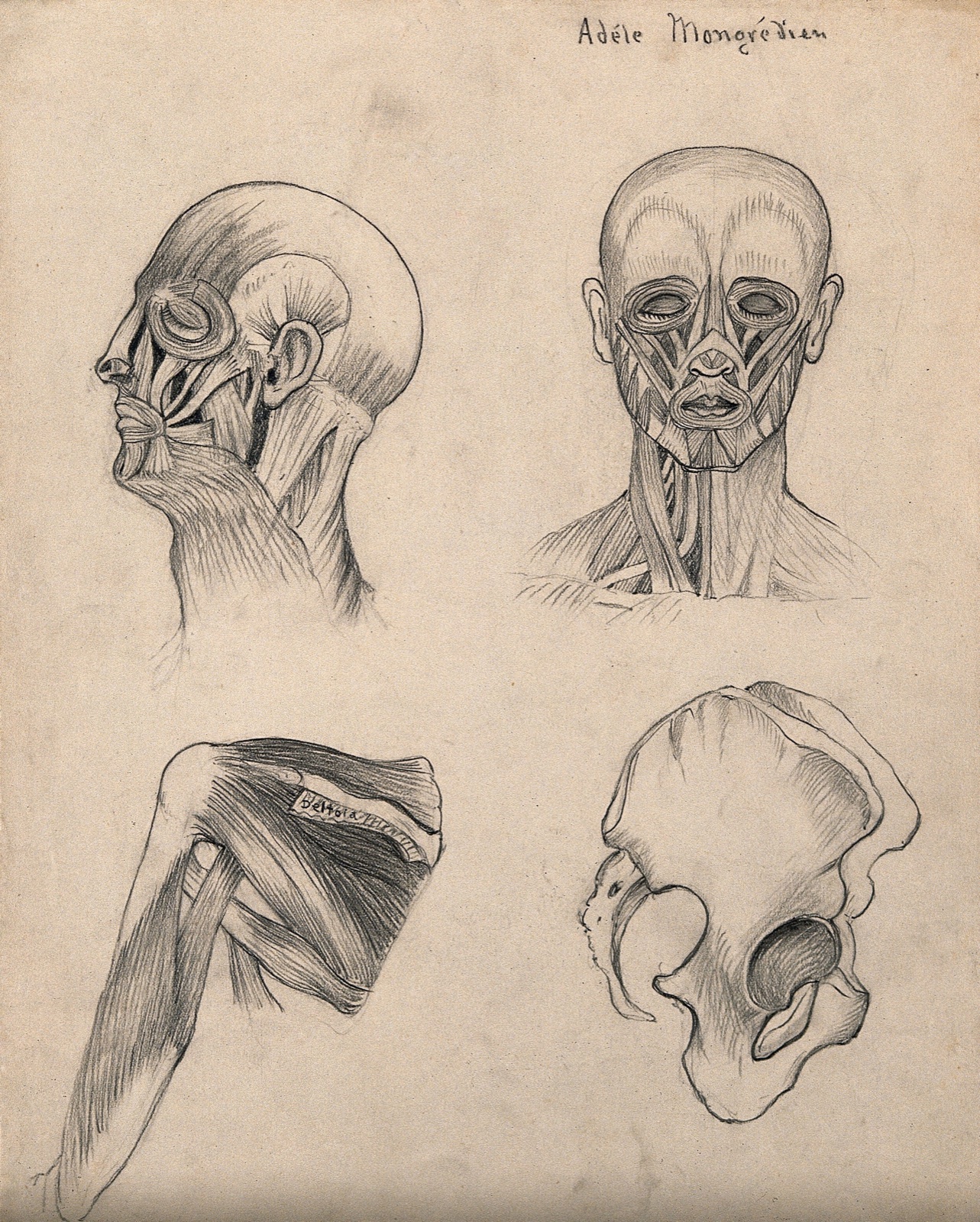
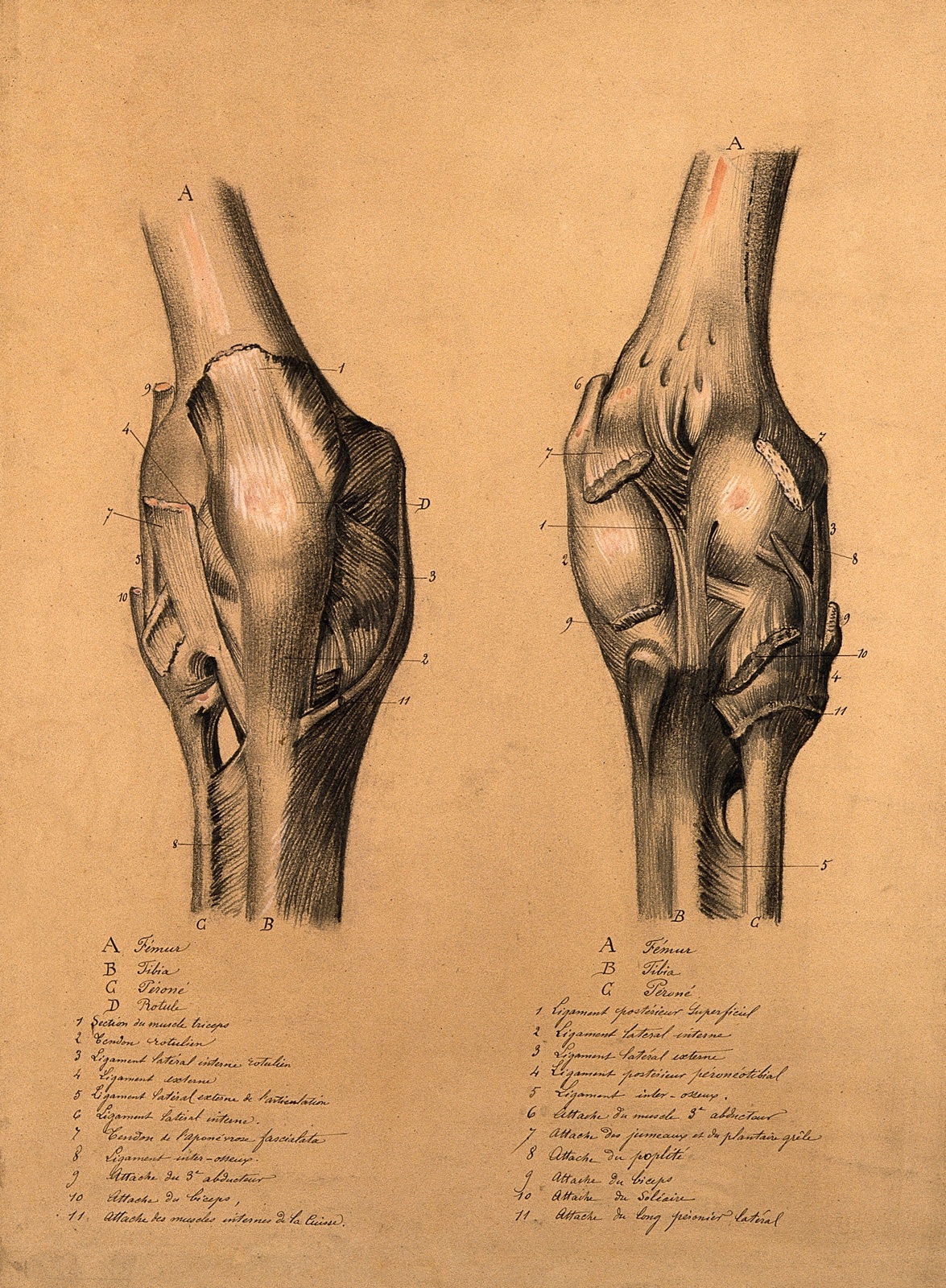
The pelvis, rear view: two studies, showing the bones and ligaments of the right-hand side of the pelvis. Pencil and black chalk drawing, with bodycolour, 1840/1880?.
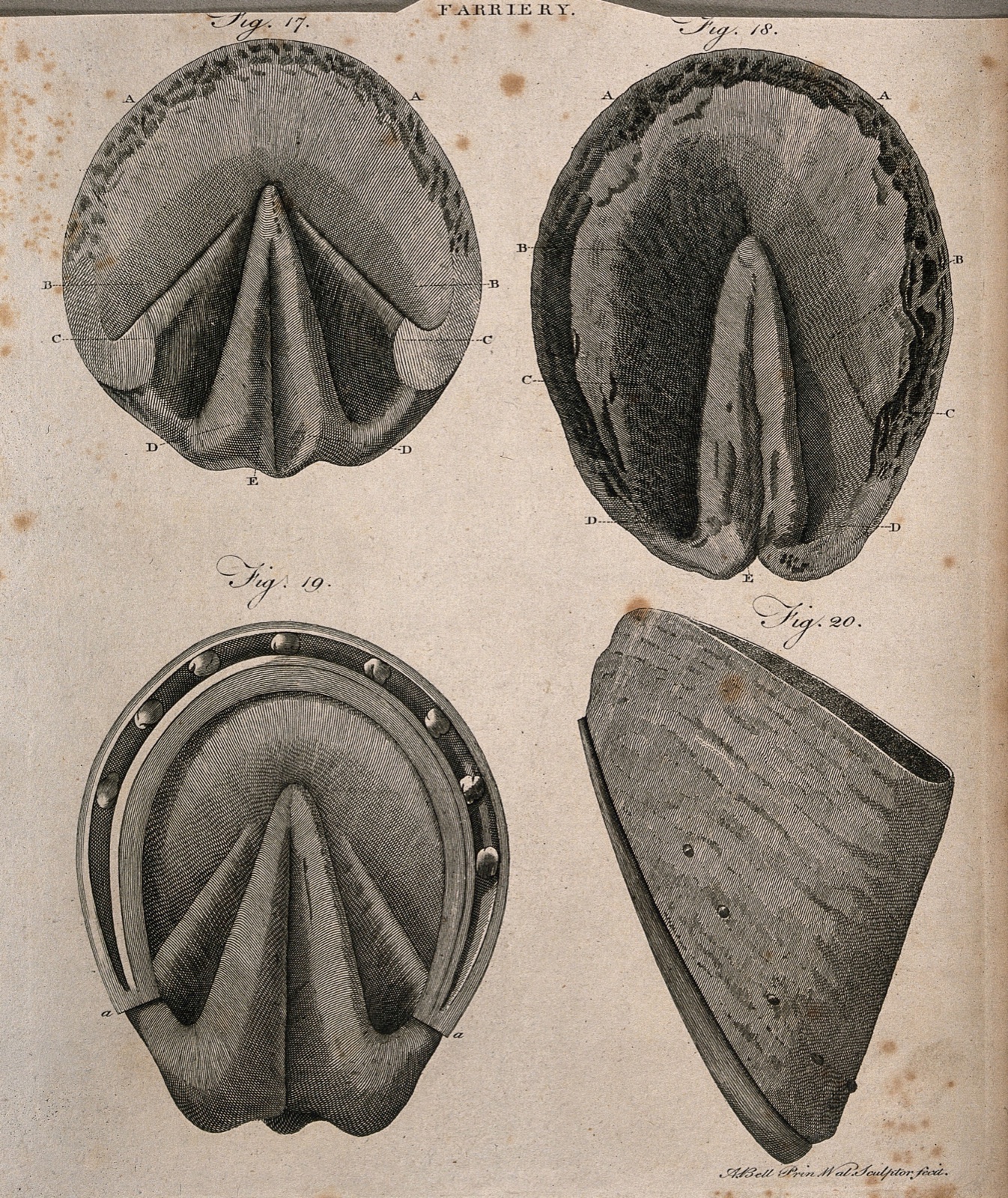
Horses' hooves: four figures showing the anatomy of the foot of a horse, both with and without shoes. Line engraving with etching by A. Bell, 1770/1800?.
Ten demonstrations of digestion, blood circulation, breathing, bone structure, smell, hearing, sight, touch, taste, the nervous system, and muscle structure. Coloured lithograph by C. Bethmont, ca. 1860 (?).
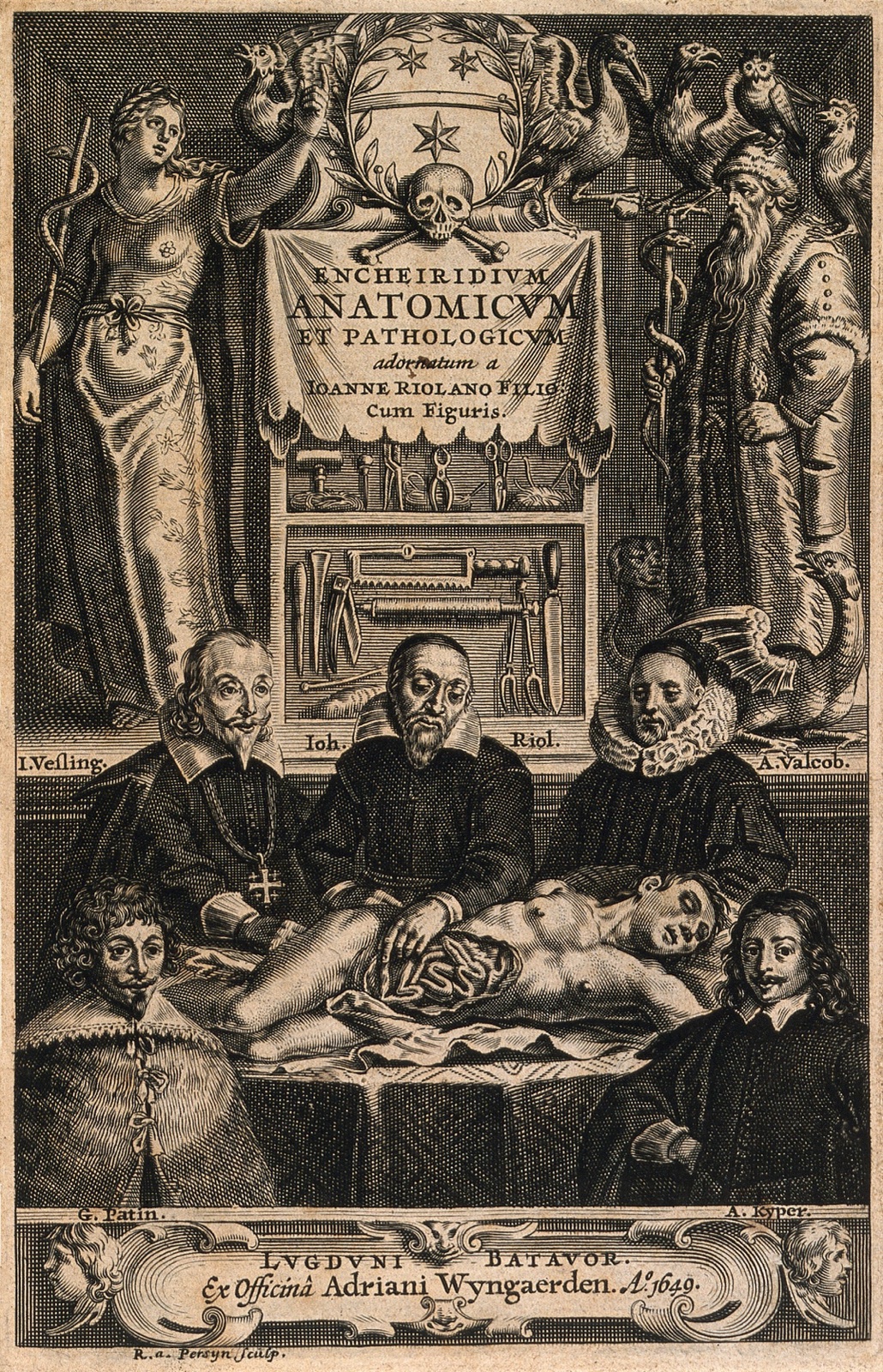
An anatomical dissection by Jean Riolan the younger (1580-1657). Engraving of 1649 by Renier van Persyn after a design of 1626 by Crispijn de Passe the second.
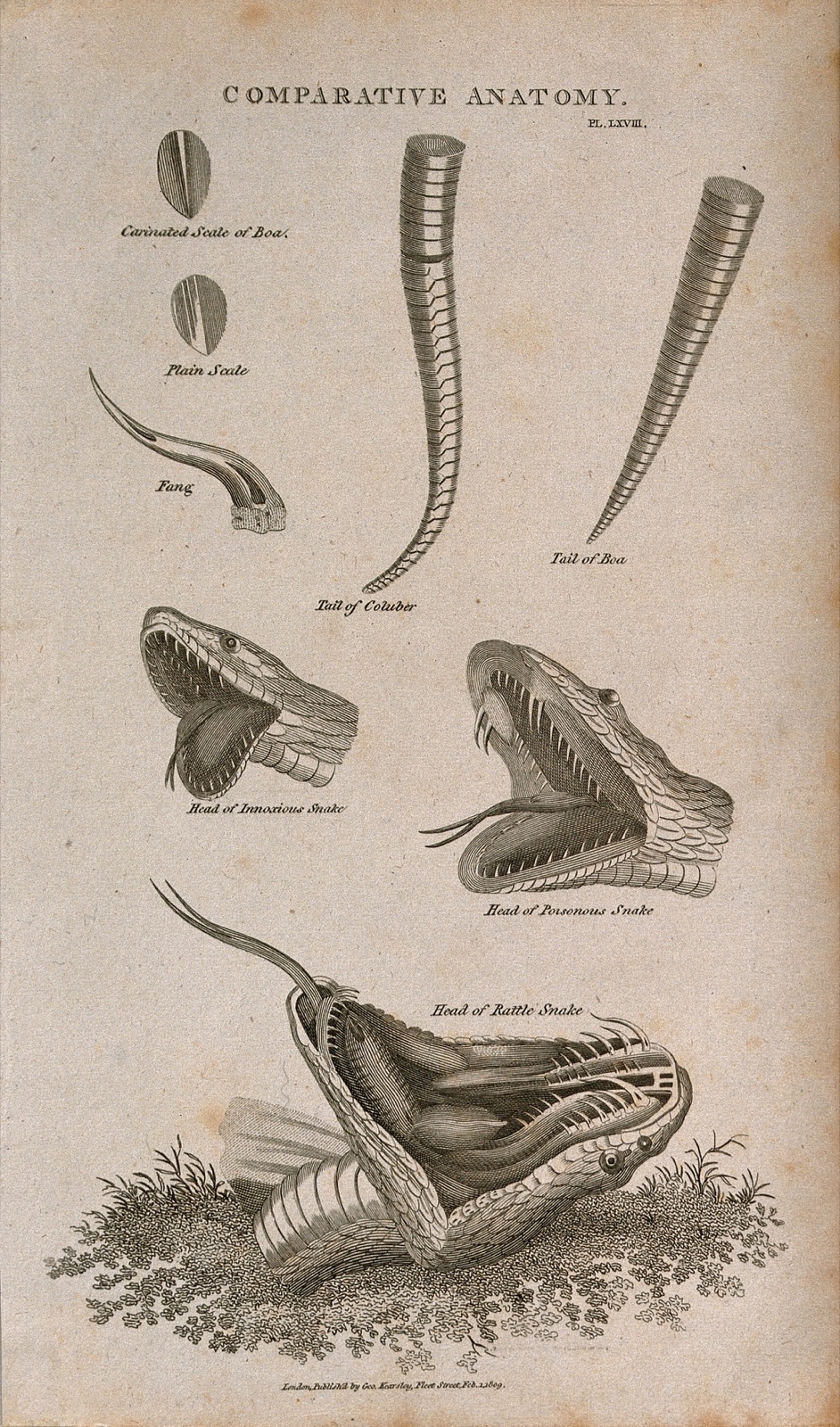
Anatomy of snakes: eight figures, including scales, a fang, the tails of a boa and a columber snake, and the heads of three species, including a rattle snake, all shown with open jaws. Line engraving after a drawing by S. Edwards (?), 1809.
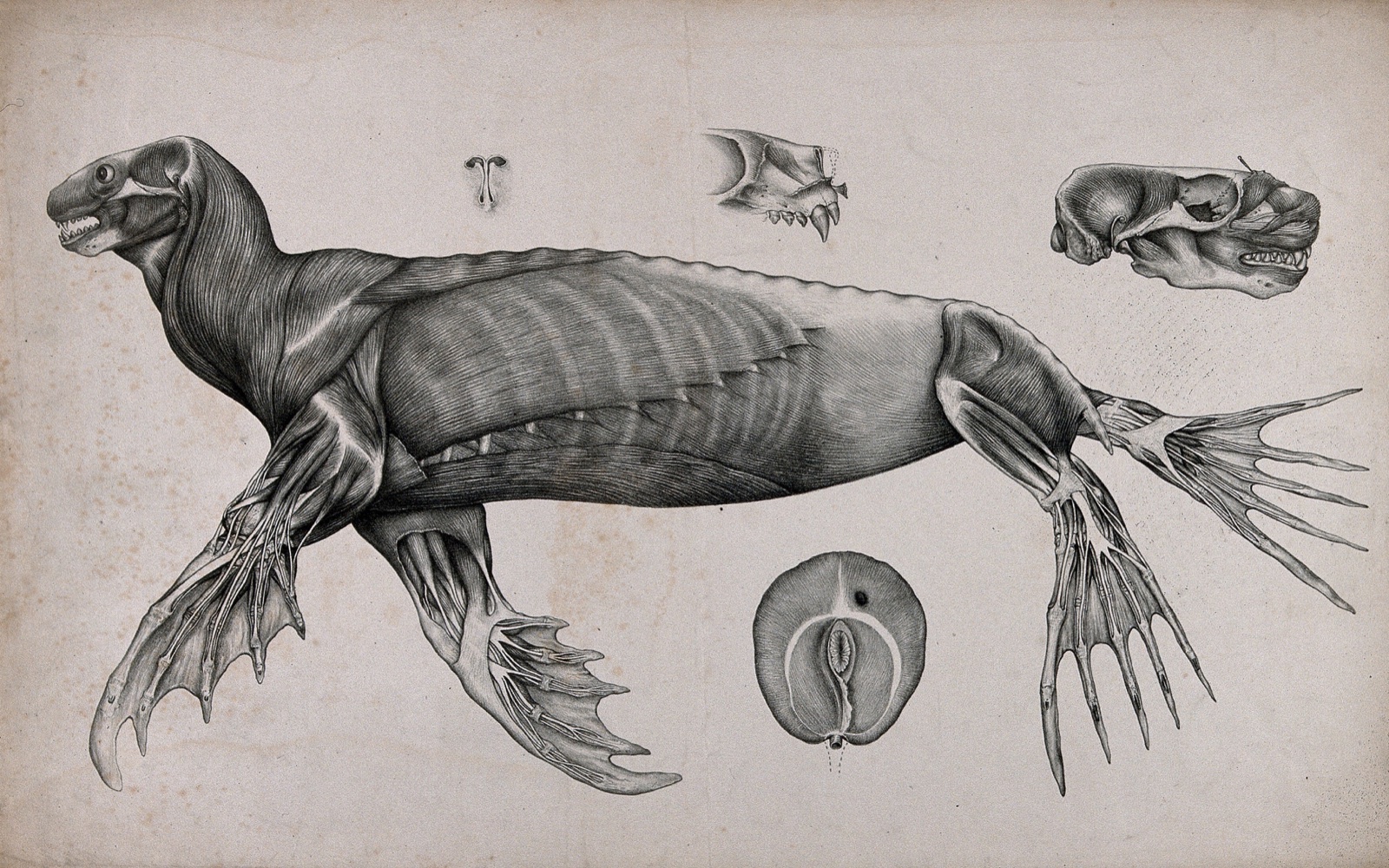
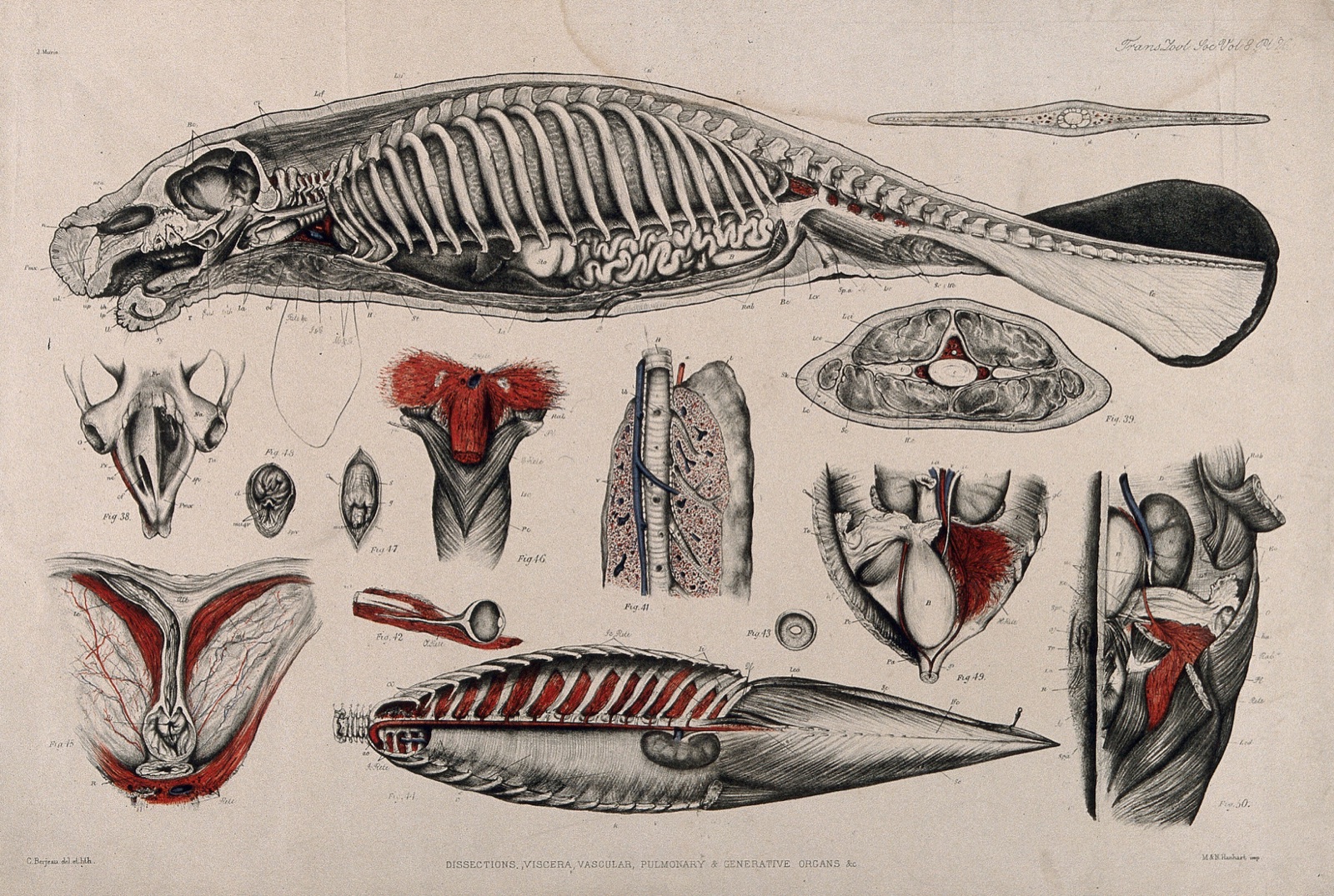
An écorché seal (or manatee?): five figures showing the musculature of the body, with details of the muscles of the face. Lithograph by C. Berjeau, 1872.
Putti perform an anatomical dissection on a dog; others hold a jar containing a human foetus; two more play with a spider; representing anatomy and natural history. Etching by B. Picart, 1729.
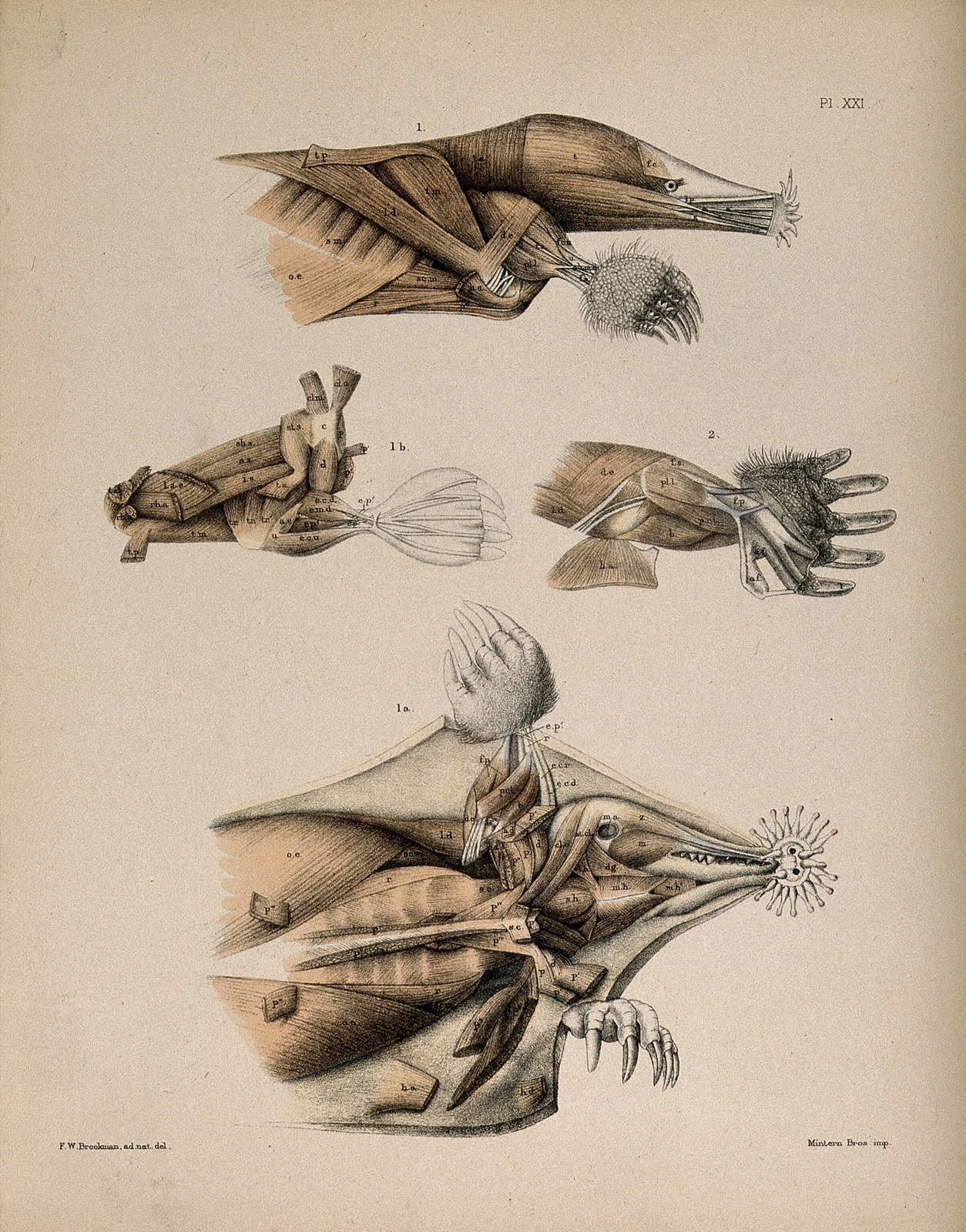
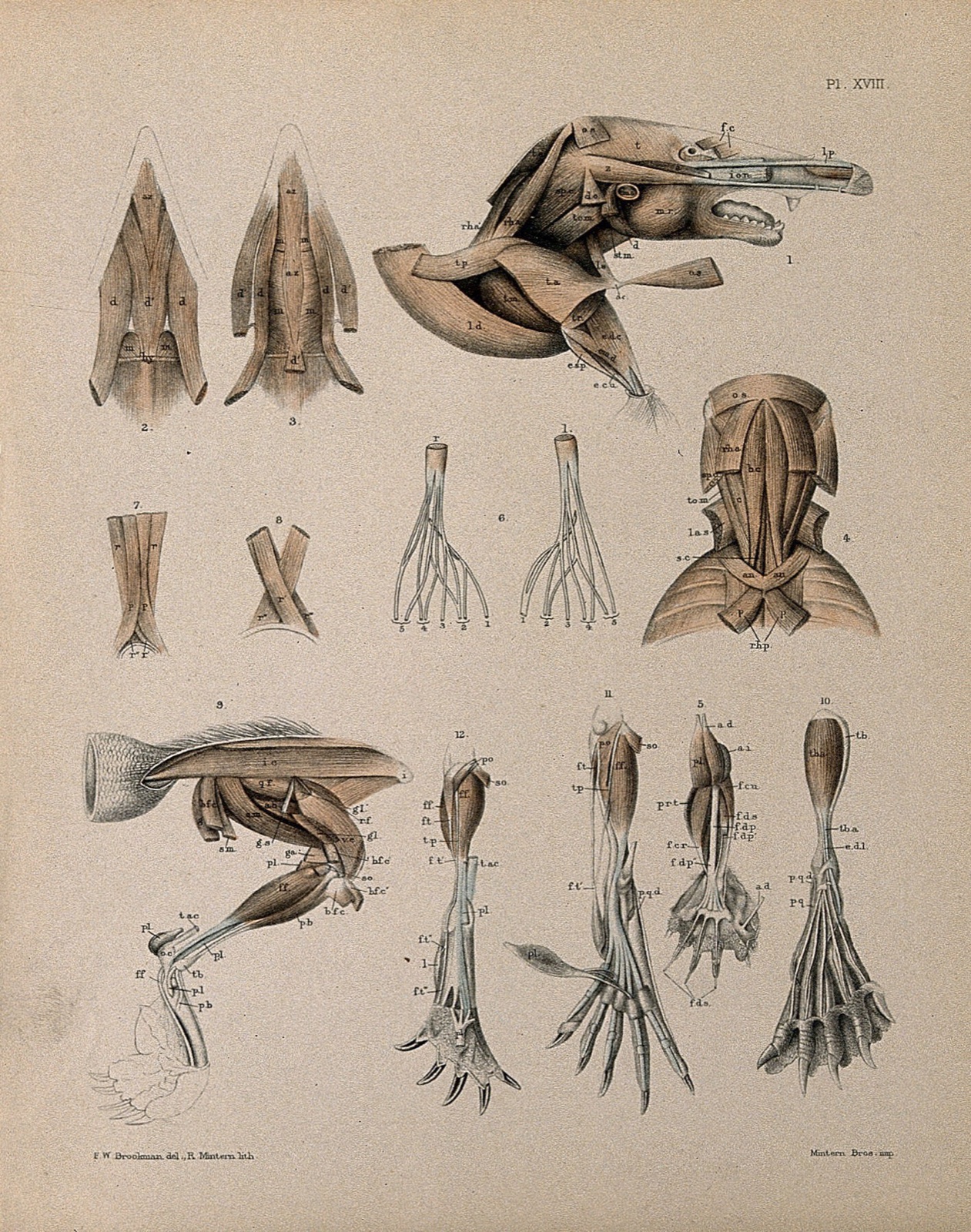
Dissections of a mole: thirteen figures, including the musculature of the head, neck, legs and feet. Lithograph by R. Mintern after F.W. Brookman, 1880/1900?.
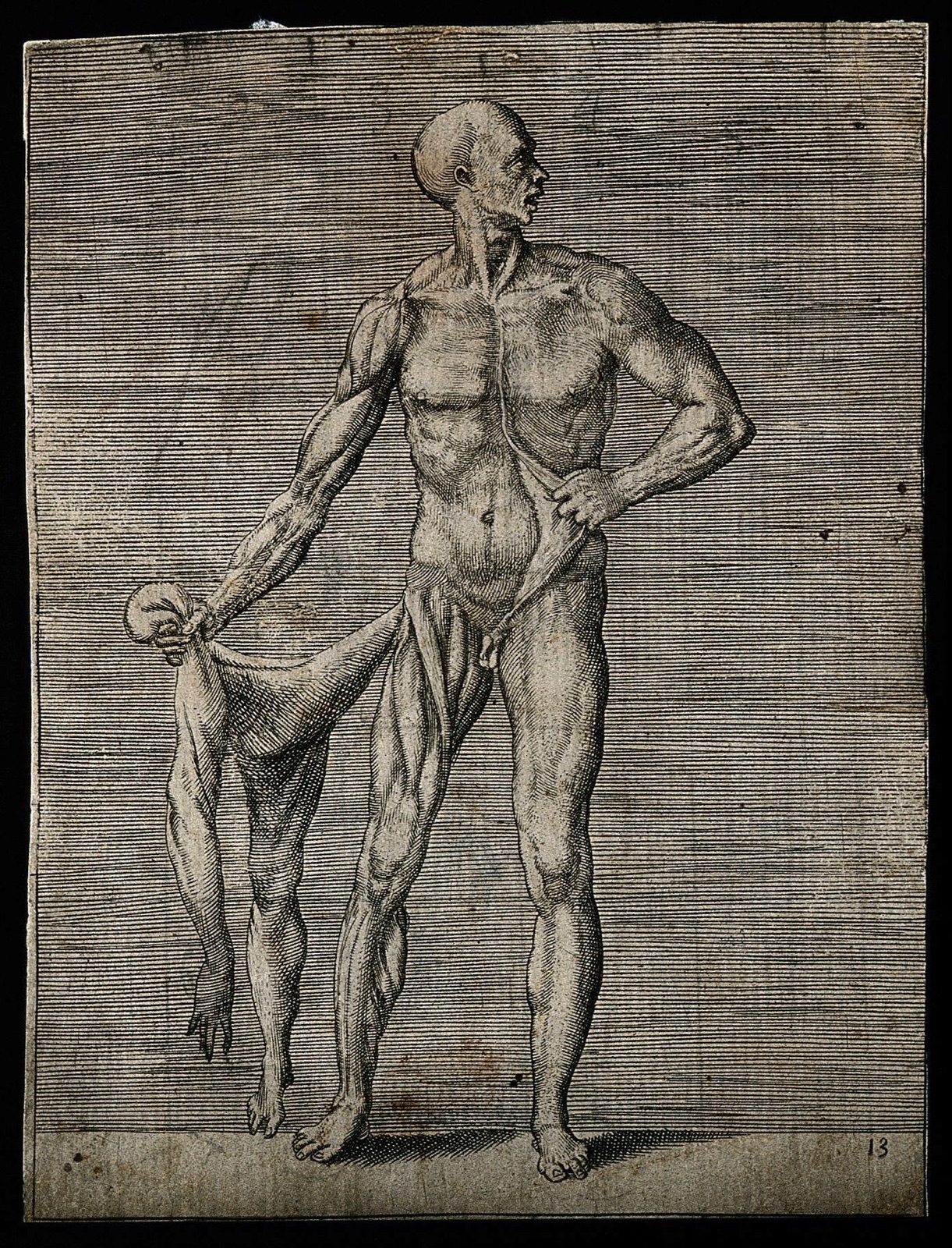
A male écorché figure, of whom only the right side of his body has been flayed. He holds the removed skin of his right side in his right hand and pulls back the skin of his left abdomen with his left hand. Engraving by G. Bonasone, 155-.
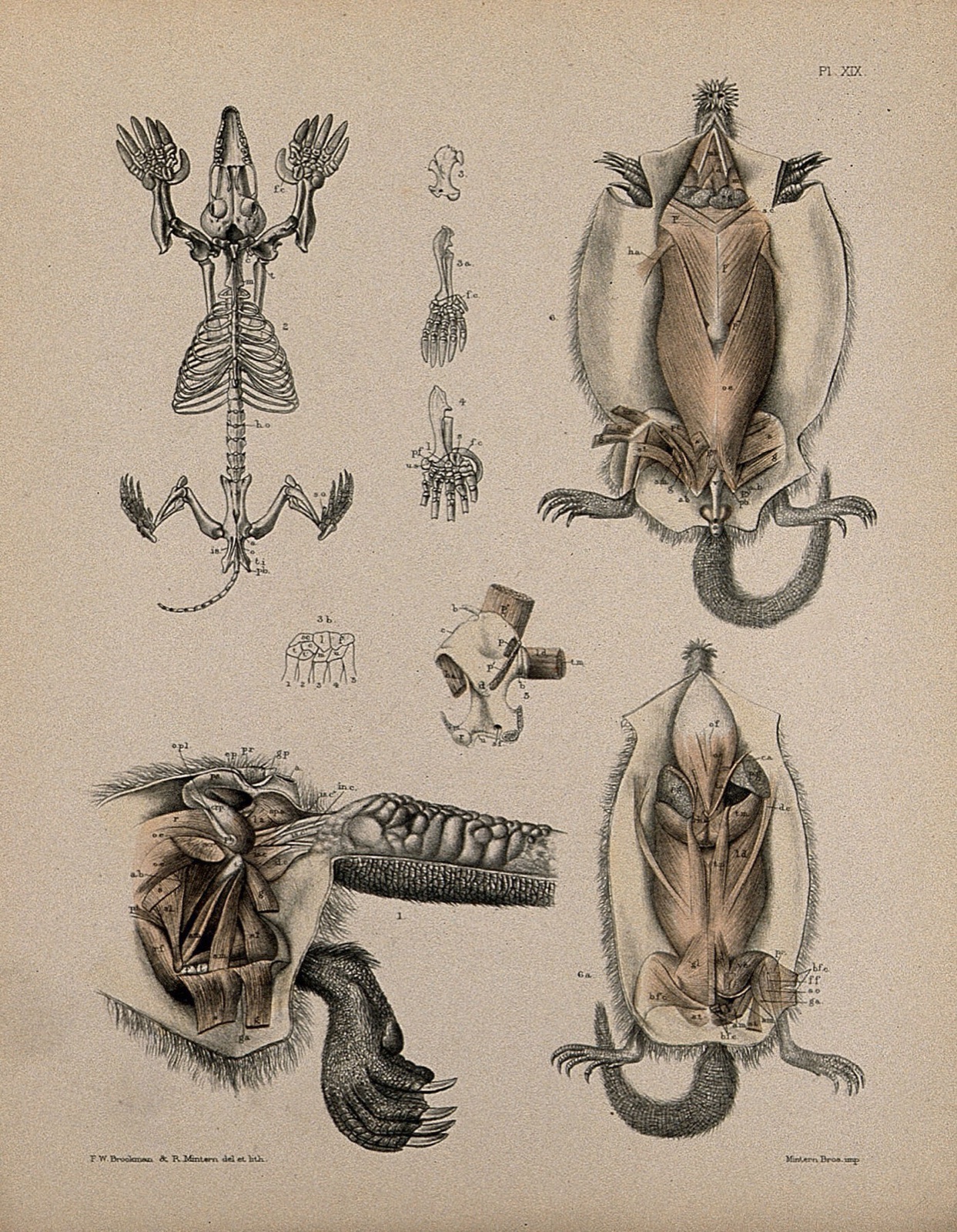
Dissections of a mole: nine figures, showing the skeleton and musculature of the underside of the animal. Lithograph by R. Mintern after F.W. Brookman, 1880/1900?.
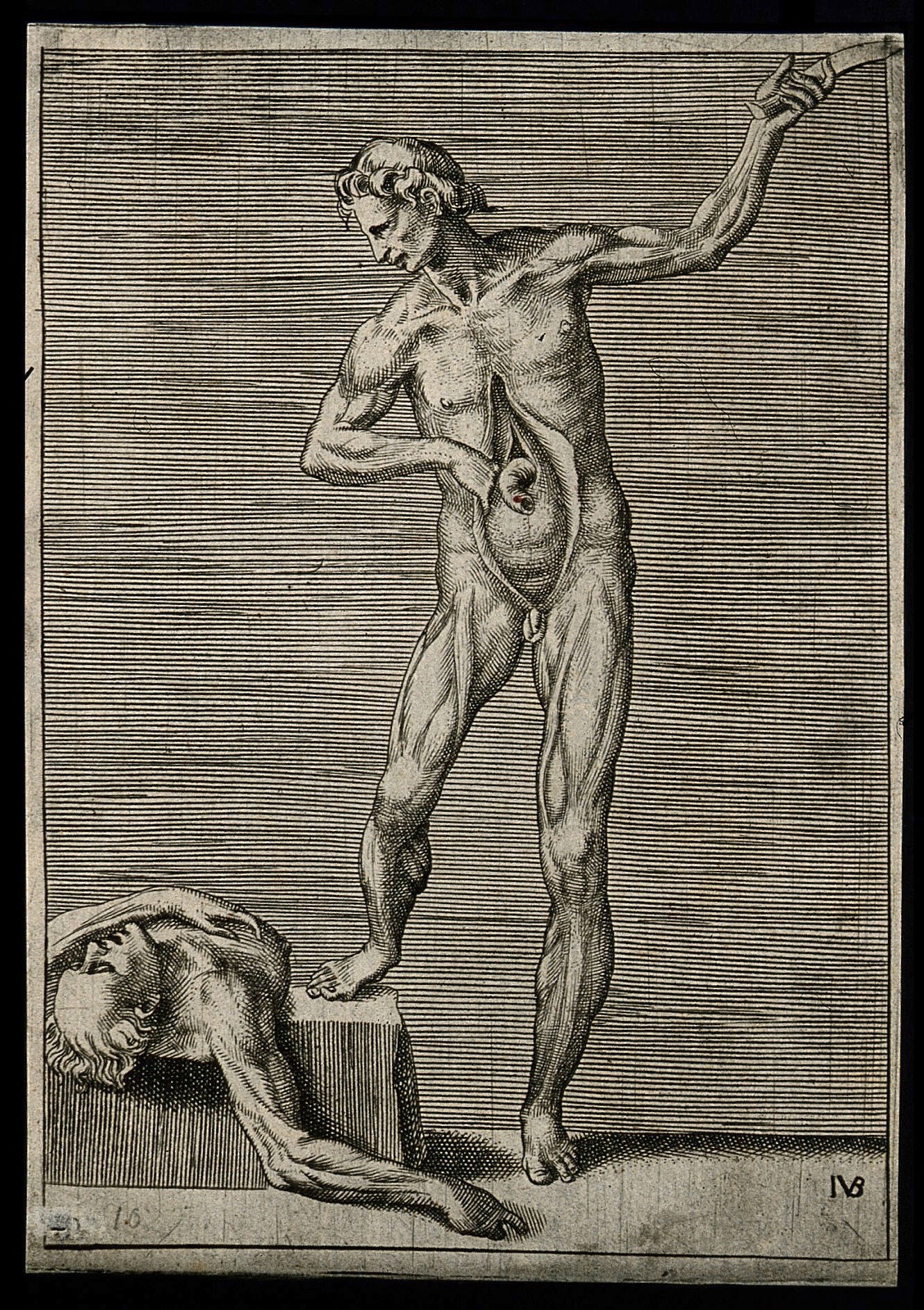
A male écorché holding a knife in his left hand, exposing his bowel with his right hand, and resting his right foot on a slab on which a cadaver lies supine. Engraving by G. Bonasone, 155-.
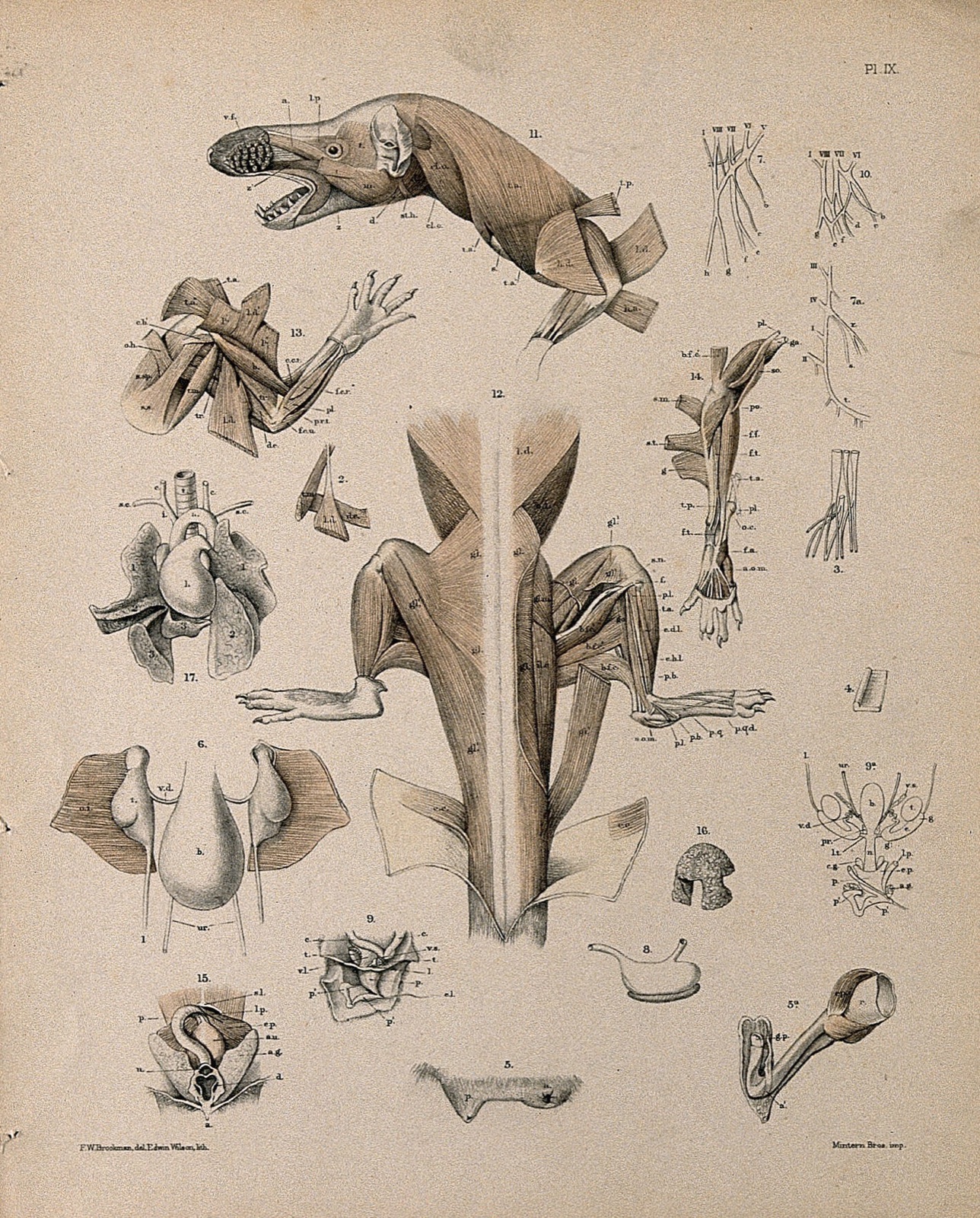
Dissection of a mole: eighteen figures, including details of the animal's musculature and internal organs. Lithograph by E. Wilson after F.W. Brookman.
An écorché figure seen from the back, holding a skull in his lowered right hand. His left arm is raised with his hand held in a gesture of eloquence. Engraving by G. Bonasone, 155-.